Per-Ma'āt
𓁦 𓌳𓐙𓂝𓏏𓁦MK 𓌶𓂝𓏏𓏜𓏪𓆗 𓌶𓂝𓏏 𓐙𓏏 𓌳𓐙𓂝𓏏𓆄𓅆OK 𓌳𓐙 𓌳𓈄𓂝𓏏OK 𓆄𓏏 𓆄𓏏𓆇𓁦 𓌶𓂝𓏏𓆄𓁦𓏛𓏥NK 𓌳𓐙𓂝𓏏𓁰OK
𓌶𓂝𓏏𓁦 𓌳𓐙𓂝𓏏𓆄𓁐 𓌳𓐙𓂝𓁦𓏏𓊠
𓐙𓌳𓂝𓁦𓏏
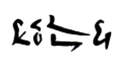
Demotic
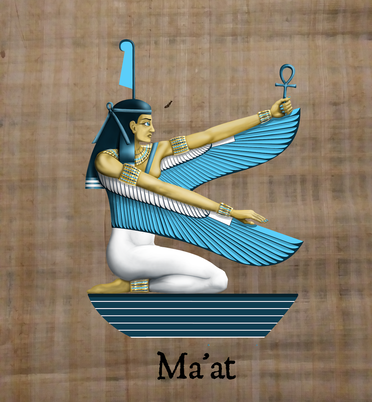
Art by Nick Galvin
MDC: mAat
Gardiner: mꜢꜤt, Mā'et
Budge: Maāt, Maā-t, Maā
James P. Allen: mꜢꜤt
Transliteration: Maat
Late Kingdom : moo'uāñ, muꜢꜤa
Coptic: (S) Mə/ ⲙⲉ, (B) Mēi /ⲙⲏⲓ, (S) Mēə /ⲙⲏⲉ, murat ?, muʔˤɘ ?
Akkadian : mu-a /𒈬𒀀 < (Wa-aš-mu-a-re-a/ wsr-mAat-ra )
Hebrew: Mu'at-h/ מע'ת, May't/ מאע'ת, Mait, Mu'atʰ, Māyt
Greek: Mu'at Μά'ατ, Mayet or Mou-at Μαγιέτ
Arabic: mꜤʕt, ماعت
English: Maat
Kemetic: Ma'at
Alt: Mayet
IPA reconstruction: ˈmuʀʕat , ˈmuʀʕatʰ (Old Egyptian, 2500 BC) ,
ˈmuʀʕaʔ (Middle Egyptian,1700 BC),
ˈmuːʕə (New Egytpian)
ˈmuʔʕəʔ (Medio-Late Egyptian 1350 BC),
ˈmøʔʕə (Late Egyptian, 800 BC),
ˈmeʔə (Late Egyptian-Greco-Romen)
mɑʔɑːt (modern Egyptological),
Mʔʕ't
Traditional Pronunciation: ma'at
Pronounced: mah'āt ; muaht/muāt >muah/muā (MK-LK) (More accurate), mayet (Based off Greek), muꜢꜥat (Some claim)
Meaning: She who is righteous, mAat 𓌶𓂝𓏏 "righteous" + .t 𓏏 "she"
Gardiner: mꜢꜤt, Mā'et
Budge: Maāt, Maā-t, Maā
James P. Allen: mꜢꜤt
Transliteration: Maat
Late Kingdom : moo'uāñ, muꜢꜤa
Coptic: (S) Mə/ ⲙⲉ, (B) Mēi /ⲙⲏⲓ, (S) Mēə /ⲙⲏⲉ, murat ?, muʔˤɘ ?
Akkadian : mu-a /𒈬𒀀 < (Wa-aš-mu-a-re-a/ wsr-mAat-ra )
Hebrew: Mu'at-h/ מע'ת, May't/ מאע'ת, Mait, Mu'atʰ, Māyt
Greek: Mu'at Μά'ατ, Mayet or Mou-at Μαγιέτ
Arabic: mꜤʕt, ماعت
English: Maat
Kemetic: Ma'at
Alt: Mayet
IPA reconstruction: ˈmuʀʕat , ˈmuʀʕatʰ (Old Egyptian, 2500 BC) ,
ˈmuʀʕaʔ (Middle Egyptian,1700 BC),
ˈmuːʕə (New Egytpian)
ˈmuʔʕəʔ (Medio-Late Egyptian 1350 BC),
ˈmøʔʕə (Late Egyptian, 800 BC),
ˈmeʔə (Late Egyptian-Greco-Romen)
mɑʔɑːt (modern Egyptological),
Mʔʕ't
Traditional Pronunciation: ma'at
Pronounced: mah'āt ; muaht/muāt >muah/muā (MK-LK) (More accurate), mayet (Based off Greek), muꜢꜥat (Some claim)
Meaning: She who is righteous, mAat 𓌶𓂝𓏏 "righteous" + .t 𓏏 "she"
Home:
Temple: Ipet-isut ''The Most Selected of Places' Karnak
Nome:
Consort
Djehuty/ Thoth
Children
Father
Ra (creator)
Mother
Siblings
Shu Sometimes
Alternative Parentage
Priest names
Hm nTr mAat / Priest
Features
A women with a feather atop her head holding the wAs scepter (power) and ankh (life) in the other.
Symbols
Ostrich feather
Vulture
The Plinth 𓐙
Roles
Goddess of justice, truth, harmony. Weights the heart (Soul) on the scales against her feather of righteousness.
Connection to other gods
Celebrations
Offering items
Ostrich feather
Scales
Azurite
Amethyst
Jade
Turquoise
Tourmalinated Quartz
Orris root
Papyrus
Frankincense
Sandalwood
Wine
Beer
Water
Bread
ib (heart) small jar or heart fetish to resemble the ib
Other names
Other Forms
mAaty-- dual form
Epitaphs
di.n.i wn rA.k --I have given a hand to open yourmouth
bwt.sn-grg-- detests their falsehood
dr-isft-- removes wrong-doers
dr-sbiw--removes rebels
dr-nftyw-- removes enemies
Hnt imntt/ Mistress of the Underworld
nbt dwAt--Mistress of the underworld
nbt pt--Lady of heaven
nft Hr--Beautiful of face
sAt rA ---daughter of Rā
sDmt-sprw-- Hears petitions
sDmt-snmHw--Hears prayers
ref. Concept of Ma'at http://www.ancient-origins.net/history-ancient-traditions/maat-ancient-egyptian-goddess-truth-justice-and-morality-003131
Temple: Ipet-isut ''The Most Selected of Places' Karnak
Nome:
Consort
Djehuty/ Thoth
Children
Father
Ra (creator)
Mother
Siblings
Shu Sometimes
Alternative Parentage
Priest names
Hm nTr mAat / Priest
Features
A women with a feather atop her head holding the wAs scepter (power) and ankh (life) in the other.
Symbols
Ostrich feather
Vulture
The Plinth 𓐙
Roles
Goddess of justice, truth, harmony. Weights the heart (Soul) on the scales against her feather of righteousness.
Connection to other gods
Celebrations
Offering items
Ostrich feather
Scales
Azurite
Amethyst
Jade
Turquoise
Tourmalinated Quartz
Orris root
Papyrus
Frankincense
Sandalwood
Wine
Beer
Water
Bread
ib (heart) small jar or heart fetish to resemble the ib
Other names
Other Forms
mAaty-- dual form
Epitaphs
di.n.i wn rA.k --I have given a hand to open yourmouth
bwt.sn-grg-- detests their falsehood
dr-isft-- removes wrong-doers
dr-sbiw--removes rebels
dr-nftyw-- removes enemies
Hnt imntt/ Mistress of the Underworld
nbt dwAt--Mistress of the underworld
nbt pt--Lady of heaven
nft Hr--Beautiful of face
sAt rA ---daughter of Rā
sDmt-sprw-- Hears petitions
sDmt-snmHw--Hears prayers
ref. Concept of Ma'at http://www.ancient-origins.net/history-ancient-traditions/maat-ancient-egyptian-goddess-truth-justice-and-morality-003131
Invocation to Ma'āt
Instruction of Ptahhotep presents Ma'at as follows:
Ma'at is good and its worth is lasting.It has not been disturbed since the day of its creator,whereas he who transgresses its ordinances is punished.It lies as a path in front even of him who knows nothing.Wrongdoing has never yet brought its venture to port.It is true that evil may gain wealth but the strength of truth is that it lasts;a man can say: "It was the property of my father.
Praise to you, Maat, daughter of Ra,
consort of god, whom Ptah loves,
The one who adorns the breast of Thoth, who
fashioned her own nature,
foremost of the souls of Heliopolis;
Who pacified the two falcon gods through her good will,
filled the per-wer shrine with life and dominion;
Skilled one who brought forth the gods herself
and brought low the heads of enemies;
Who herself provides for the house of the All-Lord,
brings daily offerings for those who are on duty.
Magnificent her throne before the judges-
and she consumes the enemies of Atum
Invocation from Egyptian Paganism p 143-
Hymn to Maat in the temple of Amun at el-hibis, translation by John L Foster
#Maat , #mAat
